
After a housing crisis turned his life upside down, Australian filmmaker Kane Guglielmi travelled across eight countries searching for answers. His documentary, Common Wealth, asks a radical question: What if the wealth we create together could benefit everyone?
Watch Common Wealth Here
Imagine working hard, building a successful life and providing a comfortable home for your family. Then, almost overnight, everything changes.
That is what happened to Australian filmmaker Kane Guglielmi. A father of two and once a millionaire, Guglielmi had built a comfortable life. But after selling his possessions and taking on debt to pursue a new beginning in Italy, COVID-19 forced his family to return to Australia.
What awaited him was devastating. Local house prices had surged by 73 percent during his year abroad. The lifestyle he once enjoyed was suddenly beyond his reach.
The experience triggered a nervous breakdown and a troubling question: If someone who once had everything could be priced out of his own community, what hope was there for the next generation?

Watch Common Wealth Here

From Personal Crisis to a Global Search for Answers
Determined to find answers, Guglielmi turned to filmmaking. Over four months, he travelled to eight countries, interviewing leading economists and thinkers about housing affordability, inequality and the future of economic prosperity.
The result was Common Wealth, a documentary challenging conventional ideas about wealth and ownership.
One important insight emerged: much of society’s wealth is created collectively through infrastructure, public investment and community development. Yet the financial rewards often flow disproportionately to those who own valuable assets.
Watch Common Wealth Here
The Hidden Wealth Beneath Our Feet
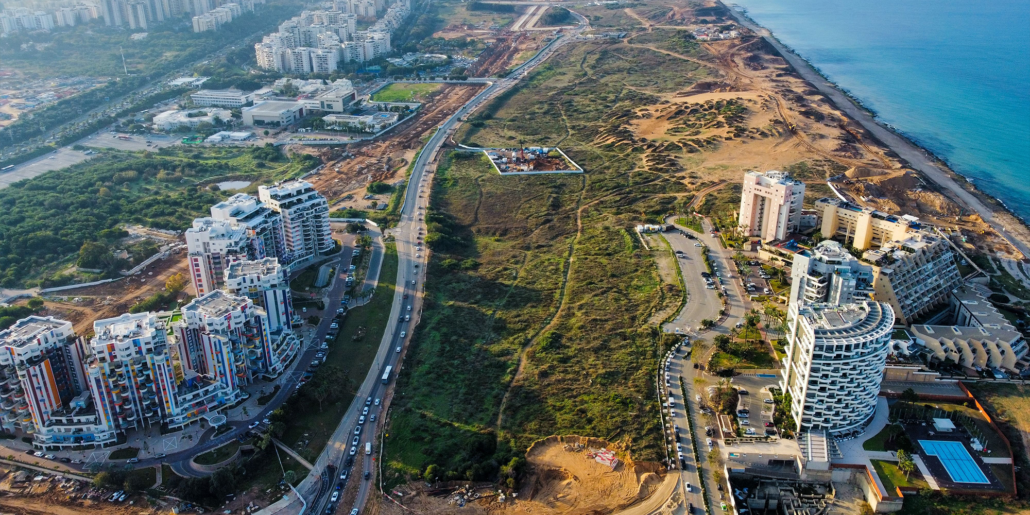
Consider what happens when a government builds a railway station, improves public transport or develops a business district. Nearby land becomes more valuable. But who actually created that additional value?
Was it the landowner, or the wider community whose investments and economic activities made the location desirable?
Australian economist Karl Fitzgerald argues that sharing rising land values could help address major economic challenges.
“In order to avoid another global financial crisis, we need to share this rising value of the earth, this bounty,” Fitzgerald tells Guglielmi.
This principle lies at the heart of the Citizen’s Dividend.
Rather than allowing the financial gains from shared resources and socially created land values to accumulate primarily in private hands, the Citizen’s Dividend proposes returning a portion of that wealth to citizens.
The idea is simple: if society collectively helps generate wealth, everyone deserves a fair share of its benefits.
Watch Common Wealth Here
Lessons from Canberra, Singapore and Norway
Guglielmi’s journey reveals that elements of this thinking already exist around the world.
Canberra and Singapore demonstrate how public land ownership and leasehold arrangements can help governments manage land for broader public purposes.
Norway offers another example. Its sovereign wealth fund invests petroleum revenues for the benefit of present and future generations.
Meanwhile, the United Kingdom’s Crown Estate shows how revenues from land and other assets can contribute to public finances.
Although these systems differ from a Citizen’s Dividend, they share an important principle: wealth generated from common assets can serve the wider public.
The Citizen’s Dividend takes this idea further by exploring how citizens could receive a more direct share of that wealth.
What If Everyone Could Share in Prosperity?
For British economist Fred Harrison, the implications extend beyond economics.
Imagine young people being able to afford homes, start families and plan their futures without constant financial insecurity.
Harrison suggests that using socially created wealth for the public good could help address these challenges.
The Citizen’s Dividend offers a way to explore this possibility. Rather than relying solely on conventional taxation and welfare programmes, it proposes sharing economic returns from land and other common resources.
Such an approach would require transparent management and careful implementation. But its underlying principle is straightforward: prosperity generated collectively should benefit society collectively.
Prosperity with a Conscience
Perhaps the documentary’s most compelling message is that economic solutions need not fit neatly into capitalism or socialism.
Guglielmi calls his alternative vision “Prosperity with a Conscience.”
It challenges both concentrated private wealth and excessive government power while exploring how citizens can have a greater voice in their economic future.
This thinking resonates with the Citizen’s Dividend, which seeks to balance productive enterprise with a fairer distribution of wealth arising from shared resources.
Common Wealth begins with one father’s concern for his children’s future. But it leaves us with a question that affects everyone.
If we create prosperity together, shouldn’t we all have a share in it?
Perhaps the question is no longer whether society can afford to share its wealth, but whether it can afford not to.
Best regards
Ollie
and the Citizen’s Dividend Team