

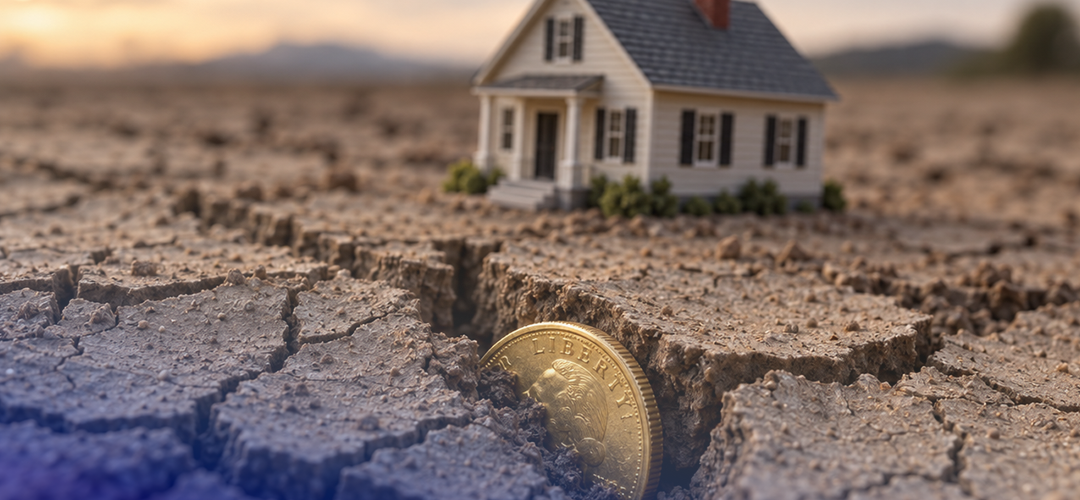
The US housing market is showing clear signs of weakness.
Lennar, one of America’s biggest housebuilders, has seen its share price fall sharply from its 2025 highs.
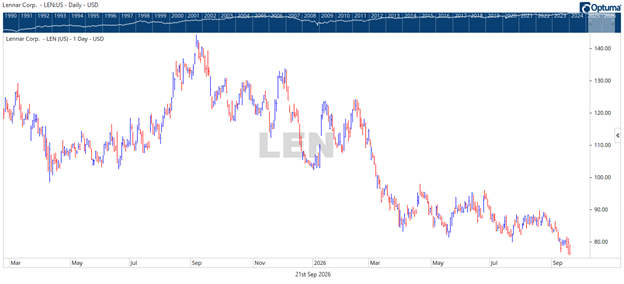
That tells us something important. Investors are expecting weaker home sales, lower profits and a more difficult housing market.
But the problem did not start with Lennar. The deeper problem is land.
For years, land and home prices rose faster than many household incomes. Housing became increasingly expensive, even before borrowing costs started to rise.
Then interest rates went up. Higher borrowing costs made already expensive homes even harder to afford. Now buyers are pulling back.

Home Sales Are Falling
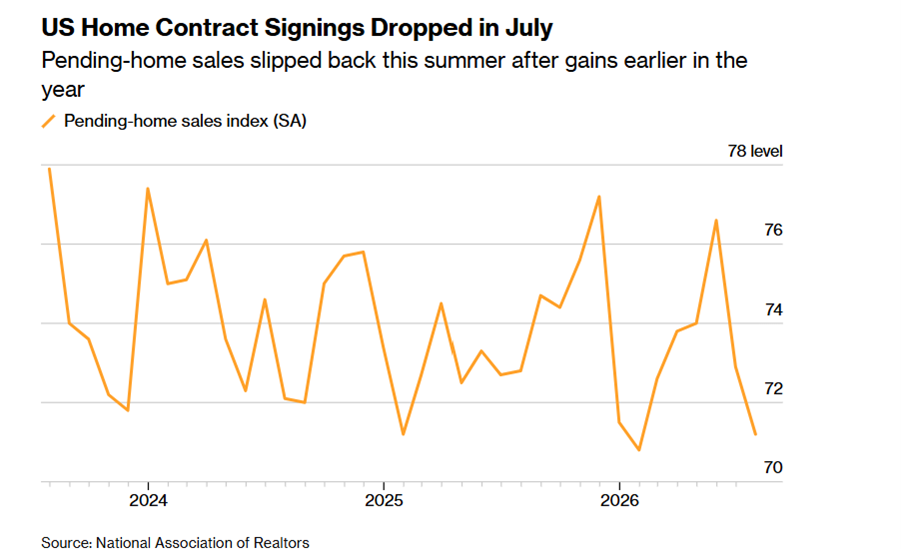
Look at the sharp fall on the far right of the chart. Pending home sales dropped during the summer of 2026. Fewer people are buying homes. Fewer people are moving.
And when people stop moving, they also spend less on many of the things that normally come with a new home. Appliances, flooring, paint, furniture and renovations all feel the impact. That slowdown can quickly spread beyond the housing market.
Lowe’s is one example.
Sales growth at the home improvement retailer has flattened as fewer people move, renovate or spend heavily on their homes. Its share price has also been trending lower.
There was a brief rise of around 2 percent on the morning of its announcement, but one short term move does not change the bigger picture.
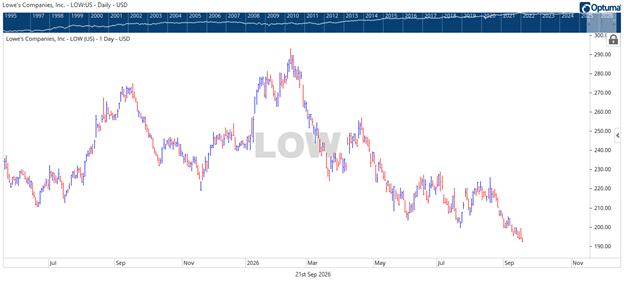
The housing market is weak, and businesses linked to housing are starting to feel it.
Home Sales Are Falling
When housing becomes unaffordable, governments often try to help buyers. They may offer subsidies, tax breaks, cheaper loans or other financial support. These policies sound helpful.
But they do not solve the main problem. They do not create more land. If buyers are given more money while the amount of well located land stays limited, that extra money can simply push land prices higher. Sellers and landowners may capture much of the benefit. So a policy designed to make housing more affordable can end up making land even more expensive.
This is why government support introduced near the top of a property cycle can make the problem worse. It may support prices for a while. But it does not fix the reason housing became so expensive in the first place.
The Real Problem Is Land
Land is different from most other things in the economy. We can build more houses. We can manufacture more cars. We can produce more appliances. But we cannot create more land in the places where people most want to live and work.
And much of the value of that land is not created by the landowner. A new train station can increase nearby land values. So can better roads, schools, hospitals, parks, businesses and public investment. The wider community helps create that value.
Yet most of the increase normally goes to whoever owns the land.
That is the issue Citizen’s Dividend wants to address.
A Citizen’s Dividend Approach
Citizen’s Dividend starts with a simple idea:
If society helps create the value of land, society should share in that value. Instead of constantly giving buyers more money to chase expensive land, part of the economic value of land could be collected and returned to citizens.
That changes the question.
Instead of asking:
“How do we keep house prices rising?”
We can ask:
“How do we make sure rising land values benefit everyone?”
The difference matters. Repeated housing support can create the same cycle again:
More support leads to more buying power. More buying power pushes land prices higher.
Higher land prices make housing less affordable. The charts are already showing the warning signs.
Lennar is falling. Home sales are weakening. Home improvement demand has stalled.
US housing is cracking.
But another round of stimulus will not solve the deeper problem.
The real problem is land, who benefits from its rising value, and who should.
Best regards
Ollie
and the Citizen’s Dividend Team